
Remembering the Ordinary
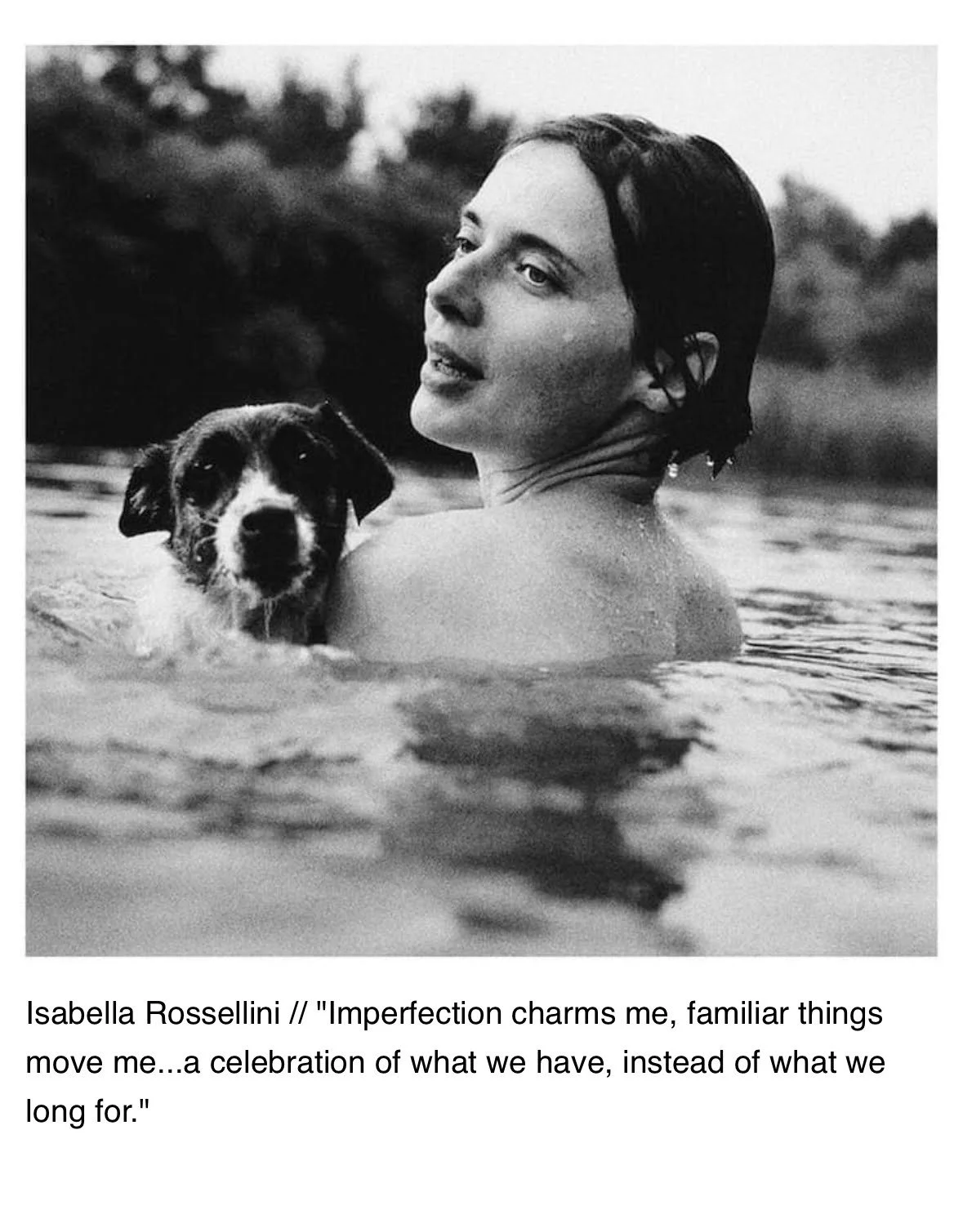
I recently came across this quote from Isabella Rossellini:
“Imperfection charms me, familiar things move me…a celebration of what we have, instead of what we long for.”
I love this. Particularly that last part: what we have, instead of what we long for.
We spend an extraordinary amount of our lives longing. For a better house, a different job, more money, a more interesting life, a younger body, a better relationship, better behaved children, more time, less stress. Sometimes the longing is big and existential and sometimes it’s as mundane as wishing we had a different couch.
And, to be clear, there is nothing inherently wrong with wanting things. Wanting is useful! It motivates us to change circumstances that aren't working, pursue goals, leave bad situations, learn new things and imagine possibilities for ourselves. The problem is when wanting becomes our primary way of relating to our lives.
Because there is always something else to want.
We are particularly vulnerable to this now because we have unprecedented access to other people's lives. At any given moment we can look at someone else's house, vacation, career, marriage, children, clothes, dinner or perfectly renovated kitchen. We have essentially created an endless catalog of alternative lives against which to compare our own (see the social media post from March 2015 below!)
And inevitably, our actual life—with its chipped dishes, annoying obligations, aging bodies, unfinished projects, familiar relationships and very ordinary Tuesdays—can start to feel a little disappointing.
But I think Rossellini is pointing toward something different. Not gratitude exactly, and certainly not resignation, but affection for the life that is already ours.
There is something deeply comforting about familiar things. The coffee mug you always reach for. The chair everyone fights over. The dog sleeping in the same ridiculous position. Your partner telling a story you've heard approximately 400 times. The neighborhood you've walked through so often you barely notice it anymore. These things aren't exciting precisely because they belong to us.
And perhaps that's the problem. Familiarity can make the things we once wanted disappear from our awareness.
We adapt incredibly quickly to improvements in our lives. The new house becomes the house. The new job becomes work. The person we desperately hoped would love us becomes the person who forgot to unload the dishwasher. What was once longed for eventually becomes ordinary.
And then we begin longing again.
There is a psychological concept called hedonic adaptation, which describes our tendency to return to a relatively stable level of happiness after positive or negative changes in our circumstances. In other words, we're remarkably good at getting used to things. This ability is enormously helpful when life is difficult. Unfortunately, we're equally talented at getting used to things that are wonderful.
So perhaps contentment requires occasionally interrupting that process.
Look around your life and notice what has become invisible simply because it is familiar.
What would you miss if it disappeared tomorrow?
What in your current life did you once hope for?
What imperfect thing has become meaningful precisely because you've lived with it for so long?
This doesn't mean we shouldn't want things to change. There are circumstances we absolutely should change, goals worth pursuing and things worth longing for. Contentment isn't deciding that everything is fine.
It's allowing two things to be true at once:
I can want something different, and I can love what I already have.
Maybe that's what it means to celebrate what we have instead of what we long for—not giving up desire, but refusing to let desire obscure our actual lives.
Because so much of what we have right now will eventually become what we long for.